The question of how to adapt and embrace a diverse, changing Japan has bubbled to the surface in recent years. With long-standing issues of wage stagnation and economic difficulties, some have viewed the influx of tourism and long-term foreign residents as a further downward force on the country’s spending power and a sense of lost identity amidst an uncertain future, leading to a spike in divisive rhetoric against those seeking to build a life in the country. Often, it comes without trying to understand or speak to these people, a dialogue between two sides who never spend the time to speak directly and understand their shared perspectives or similarities.
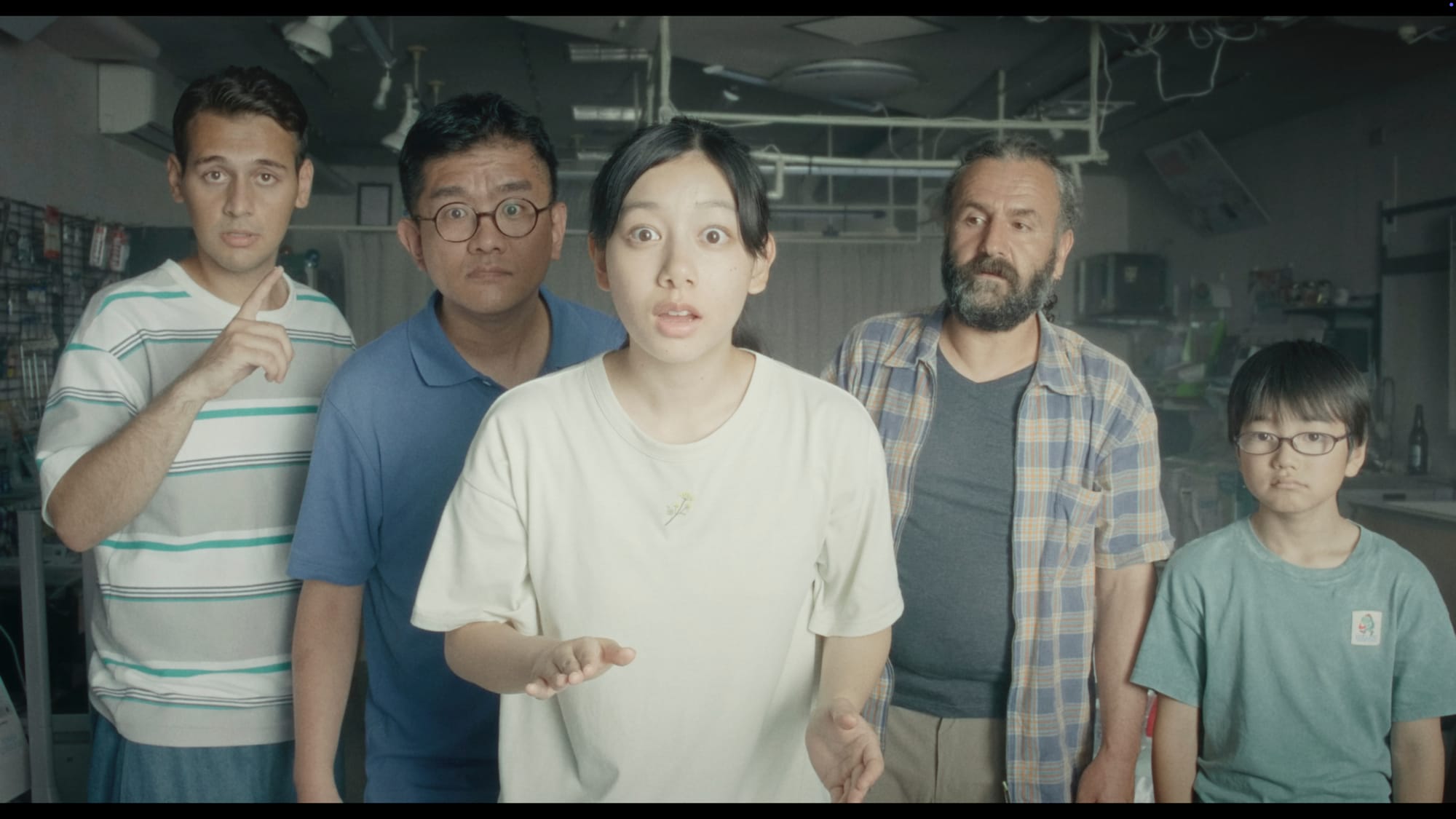
You can somewhat understand it, however, if you’re a person who feels let down and left behind by those in power as support is offered to a new wave of unfamiliar faces. Doubly so if you’re someone like Koga Kazuhiko (Kazuyoshi Kezuka), a deaf man running an electronics shop that many not in the same situation fail to understand, and aren’t exactly trying to find a way to effectively communicate and understand his grievances. He’s used to just having people look at his disability before him, and miscommunication is a common fact that serves as the inciting incident of The Chatterboxes, a comedic drama about a government revitalization project that sends the deaf community into a direct collision course with the Kurdish community that recently moved into the same neighborhood.
The film comes from Ken Kawai, a creative whose main work comes as the leader of a support group for CODA people in Japan - hearing children of deaf adults. The difficulties in daily communication are an obvious issue that these children are forced to navigate, with parents who struggle to interact with a hearing world, kids forced to work as translators and messengers between the hearing and deaf for their family from a young age, while being the inevitable person stuck in the middle of the clashes that occur when people can’t agree despite being the innocent party. Moreover, they see the challenges their deaf relatives face, while being all-too-aware of the infantilizing, condescending way people interact with these people the same as you or I, except for their lack of hearing.
The challenge that Kazuhiko and their family face, one which their CODA child Koga Natsumi (Itsuki Nagasawa) is forced to assist in navigating, is one bred from the desire of those unwilling to listen to appear like a supporter of the disadvantaged, without actually trying to listen to their concerns directly. One day, seemingly without warning, a family of Kurdish immigrants suddenly move into their same neighborhood to open a shop, and immediately tensions flare. A broken light by a child not witnessed or heard by Kazuhiko gets blamed on these newcomers who suddenly appeared in their hometown without warning, only escalating as the two groups are left to essentially fend for themselves by a local government already taking a victory lap on local TV for supporting both disabled and immigrant communities.
Without an attempt to support both the deaf community in this shop and beyond, or the Kurdish family brought in to the area without a proper introduction, it’s only natural that people would be distrustful of one another. Yet it’s only a further sign of how no one is directly trying to understand one another and coming to their own conclusion that suits their own preconceptions. Miscommunication is a core theme of the film. When the local government finally intervenes with a meeting, it only proceeds into chaos when the Kurdish interpreter only speaks Turkish and the time it takes to go through the layers of sign language and spoken language gaps hold them back.
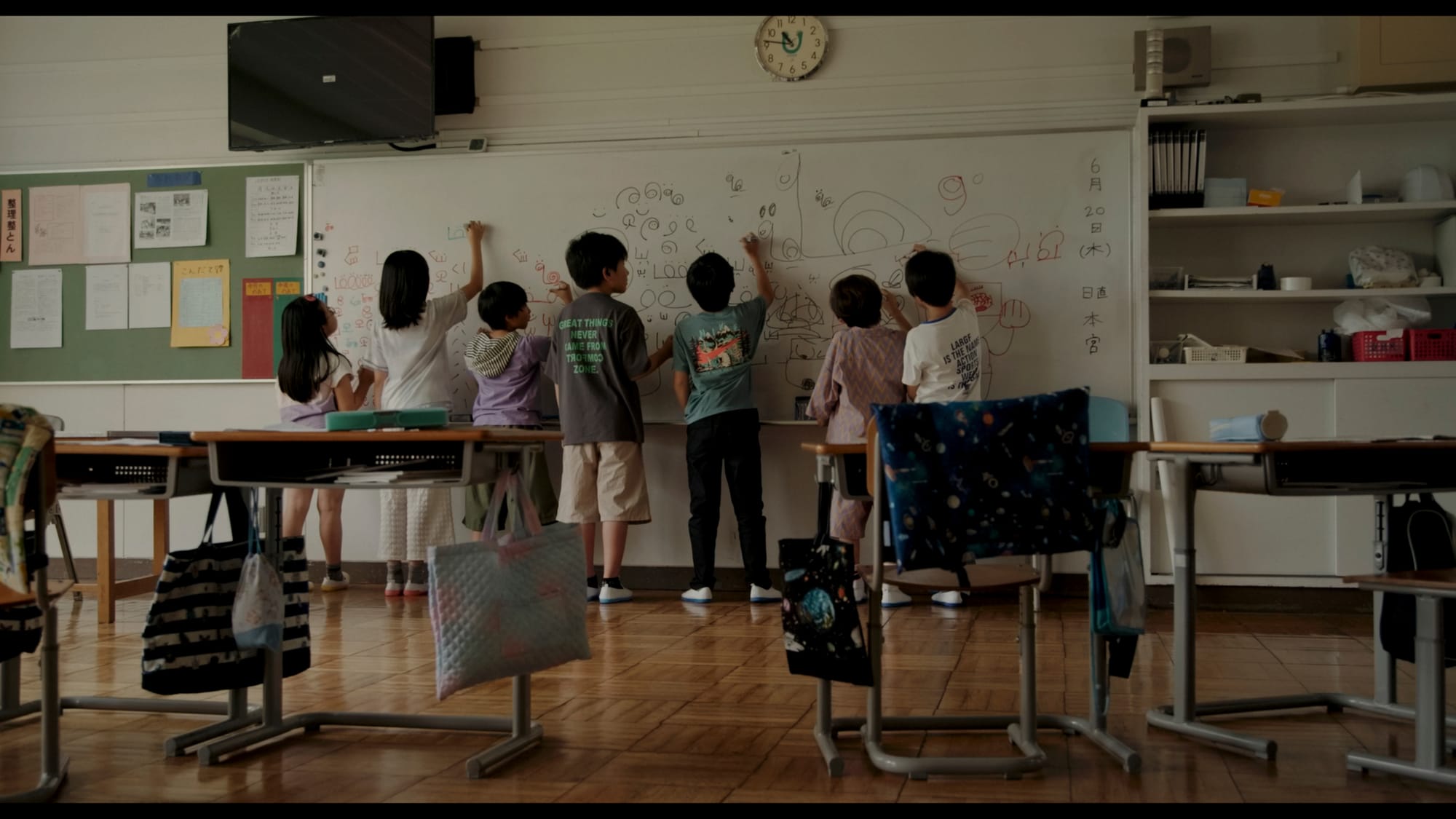
It makes Natsumi, and their foil within the Kurdish family Hiwa (Yildirm Firat), the emotional heart of the film. Hiwa can speak Japanese while Natsumi can use sign language, making them the only people on each side of this admittedly-petty fight who can act as a messenger. They’re both tired by it all, forced to be representatives and the point of contact of their families at a way-too-young age while the older relatives are more childish than these kids forced to become adults too soon. Their unlikely connection reminds me a lot of the more solemn relationship at the heart of 2022’s My Small Land, a film that also centered Kurdish residents in Japan as their refugee status was revoked and their life in Japan for the past decade was put under threat.
It’s a fascinating core concept for the film because it’s the exact issue playing out across Japan right now. For disabled and under-served communities, they feel overlooked and ignored. Immigrant labor in an aging society is needed in Japan, but there’s no support for helping them integrate. Without this, only appearing to swoop in for a photo opportunity, when things go wrong they’re left to blame the only thing that’s changed: not the government who never listened, but the newcomer. The other. The one who simply can’t be reasonable. The TV people and the local government misrepresented deafness as a curse, helping foreigners as a blessing, while doing nothing, but now there’s new problems, the other, rather than the systems, take the force.
Unless you reach out and listen.
That being said, the heavier subject matter of feeling like an outsider whose identity makes you ignored by the world is not all there is to expect from The Chatterboxes. The film, despite tackling a very real and contemporary problem facing a changing Japan, is willing to poke some fun on all sides in a refreshing manner. When tales like these exploring social issues can often feel like they must treat the topic with upmost sincerity to bring the audience alone, it feels more human and authentic to let the film get a little bit strange and have a little bit fun beyond the more delicate issues it faces.
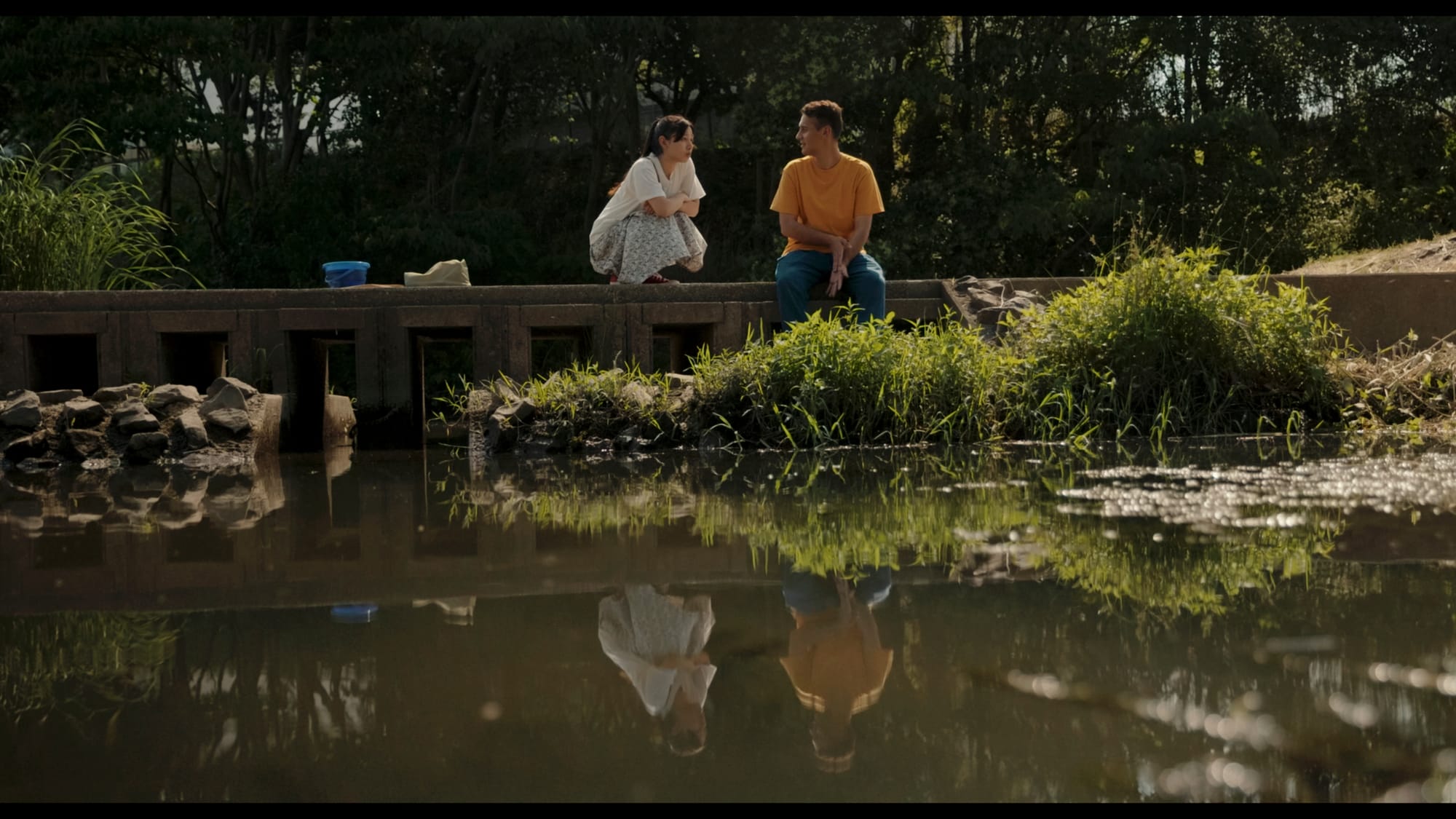
One subplot sees Kazuhiko trying their best to sell these absurdly-powerful lights imported from abroad, while another allows the younger members of the family to get away from the bickering parents to have fun and enjoy their youth. Despite the fact that we are forced to reckon with the discrimination and complex issues that shape their distrust, the characters are not limited to their struggles. Without expecting it, this turned out to be one of the stronger comedies, particularly in its final act and unexpected ending, that I’ve encountered this year.
Above all else, this is a rare film to see, showcasing all sides of the conversation surrounding the growing foreign population in Japan with sincerity, complexity and humor. The jump between sign language, Kurdish and Japanese, often partially left deliberately untranslated, creates gaps in our understanding that not only demand our attention but force us to take a step back and attempt to understand the issue. Through that, maybe a new path forward for this changing country can be found, and one that brings those already overlooked (like the deaf community) along for the journey. The Chatterboxes strikes a fine balance, and is one of the more unique films coming out of this year’s Tokyo International Film Festival.
Japanese Movie Spotlight is a monthly column highlighting new Japanese cinema releases. You can check out the full archive of the column over on Letterboxd.