Music is omnipresent across our society, and the growing role the internet plays in our lives has only emphasized this. If you scroll social media feeds, between talking heads you will find trends to the latest songs and dance videos. We consume more media than ever, and music streaming has made discovery easier (but also more disposable) than ever. We have more music than ever before, but does it resonate with us the same way as it did before?
If there’s one throughline that defines the works of famed anime director Shoji Kawamori, it’s the power of music to connect us. It’s core to the Macross franchise he helped to pioneer, and has been a present factor in most of his projects throughout his career. Even his work at the recent Osaka Expo 2025 saw him create his own pavilion where he weaved themes of humanity’s connection to music to their ability to create, embodied by music from Yoko Kanno. In many ways, Kawamori is the creator destined to comment on this moment of online connectivity, AI, and music, something he attempts to weave together in his original feature film, Labyrinth.
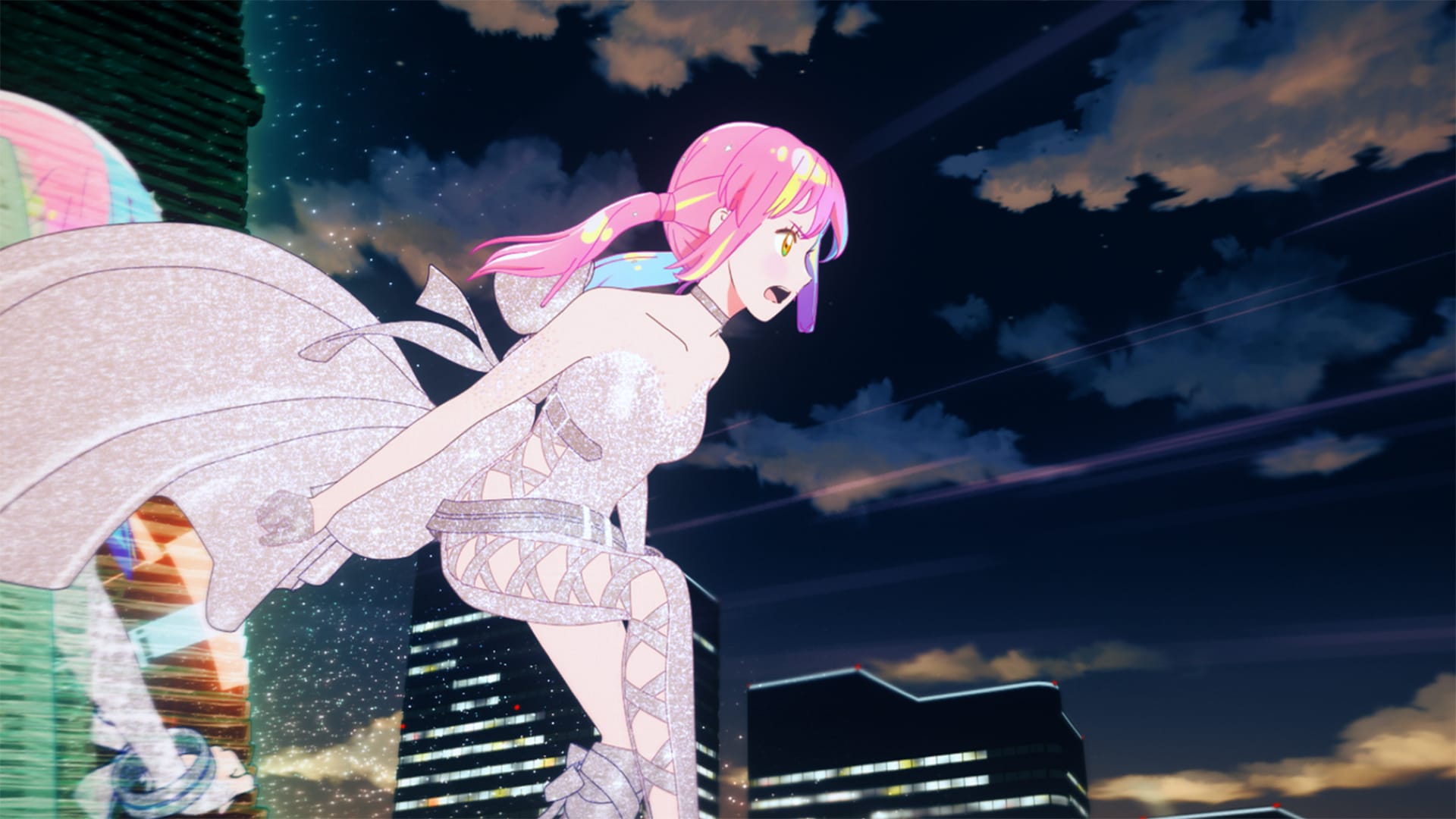
The film made its world premiere at the most recent Tokyo International Film Festival ahead of a nationwide release on New Years Day 2026, emphasizing the connection between creativity, music and the internet by bringing in original online artists as well as casting Atarashii Gakko!’s SUZUKA to play the lead role of Shiori. She’s a teenager lacking in confidence, the opposite of her influencer friend Kirara Kurashina. After falling as the two danced together and Kirara posted the embarrassing clip online, she rants about it on an anonymous account. As she does her phone, damaged in the fall, cracks, not just breaking her screen but splitting her soul, part of it ending up in a labyrinthine, deserted Yokohama inside her smartphone while an unknown persona goes on ruining her life.
Or is she? The persona is popular, famous. Maybe it’s for the best? Or is there a way to embrace her true self as a blend of these ideas, accepting the vulnerability we hide in the search for a perfect online image while gaining the confidence to be a true self?
Despite working such a long career in animation and beyond, this is Kawamori’s first ever fully-original non-franchise feature-length animated feature. After so many years, why now? In fact, this film has been a long time in the making
“I’ve actually wanted to make an original film for much of my career, but I would often get partway through making it and run into issues that would hold it back,” Kawamori explained. “This time it was thanks to everyone around me that we were able to make this work. With that decided I was thinking what to make, since with a movie based on a TV series you can predict fans will likely see it, but a fully-original story you need to make sure you know what’s best to interest new audiences, which got me thinking about my smartphone.”
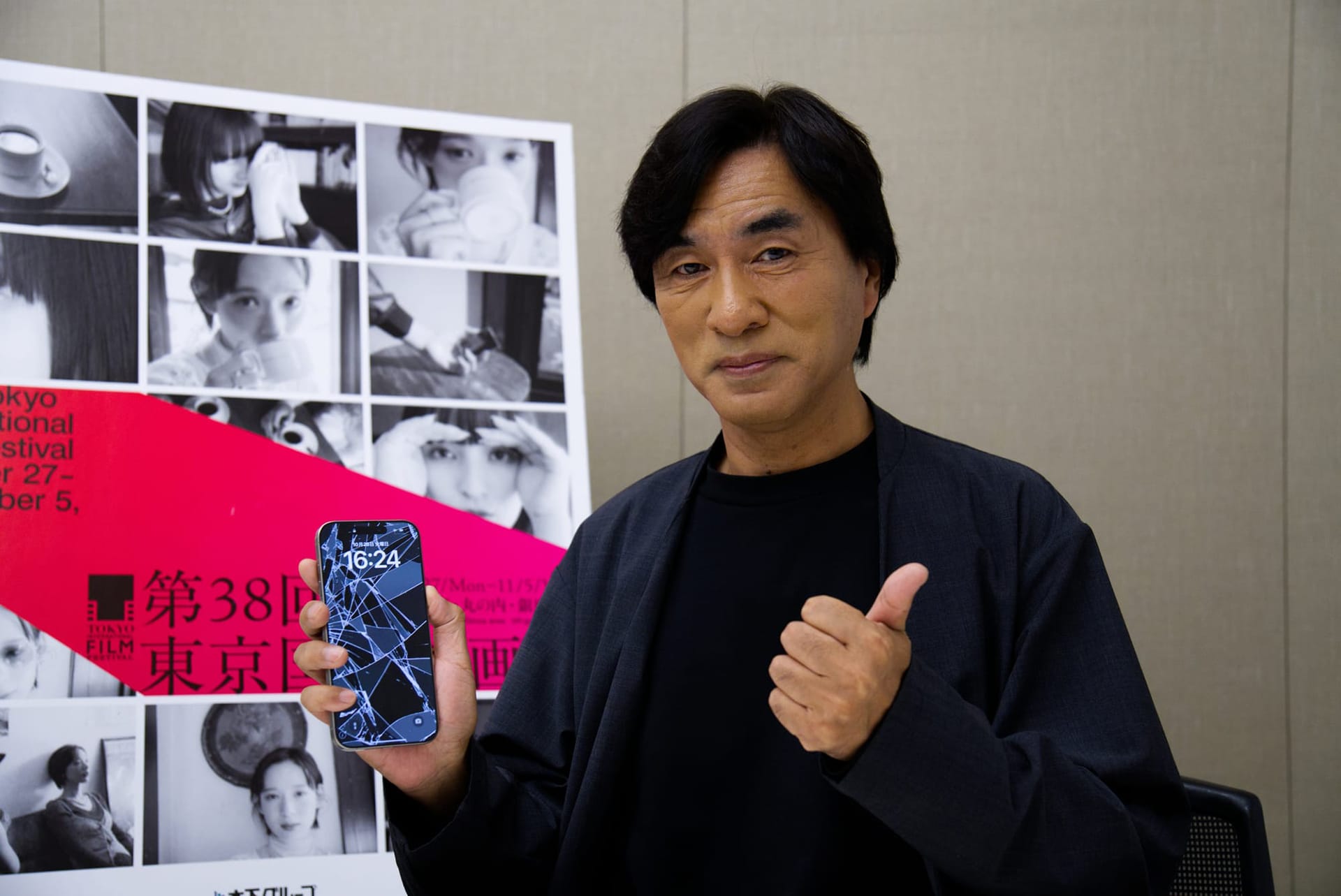
“Sometimes it would get cracked [like we see in the film], and these devices are very convenient but they’re also an extension of ourselves. When my phone cracked, I began to wonder if a part of me was cracked too, in a sense, and when I brought this up in the creative meeting we thought ‘this could work’. Almost everyone has one nowadays, so such a story would likely resonate with anyone. Also, when you make this story as a TV series, while you can dive more into some themes, these ideas can sometimes turn into a gimmick by the end. A two-hour length is perfect in this case for this story.”
Running throughout the film is the question of how we as people have seen technology not just mold the ways in which we communicate but how we communicate with one another. The internet has shaped the lens through which we see the world: social media is not just a way to connect but to project a personality that will inevitably warp and shape the person we share with others. What is shown through these platforms and what’s popular shape trends and conversations. Power on these platforms can shape the direction of human interaction.
While the smartphone may not have been an idea when Kawamori worked on Macross or even series like Aquarion or others, it doesn’t mean the idea of how the media can shape our communication hasn’t been a part of his prior works. The medium has changed, but the message has stayed the same, and that understanding of the link between technology and communication has even influenced how he’s used different technologies as a vessel for his message. Beyond animation, Kawamori has worked on projects even beyond entertainment with things like the miniature attraction Small Worlds, while his aforementioned work at Expo 2025 utilized VR headsets.
Kawamori was able to rely on his own understanding of these ideas and his own interactions with using a smartphone that inspired the initial ideas of creating Labyrinth. Ultimately, though, as he would himself admit, he’s not a teenage girl who’s only grown up with phones and has viewed this technology as an ever-present, nor is he a man constantly scrolling TikTok. For that, he had to rely somewhat on his younger team members to help crafting aspects of the story.
“Of course, we all rely more on smartphones and technology for every aspect of our lives, so I can see how it impacts our lives and the world around us. But when it comes to things that I was less familiar which I wanted to depict in this film [like social video], I was lucky to have a lot of younger members on the production who could advise if they thought one idea was maybe not accurate or wouldn’t work for the story. But also, a lot of the themes we cover in this film are universal regardless of age group, so it wasn’t too much of an issue.”
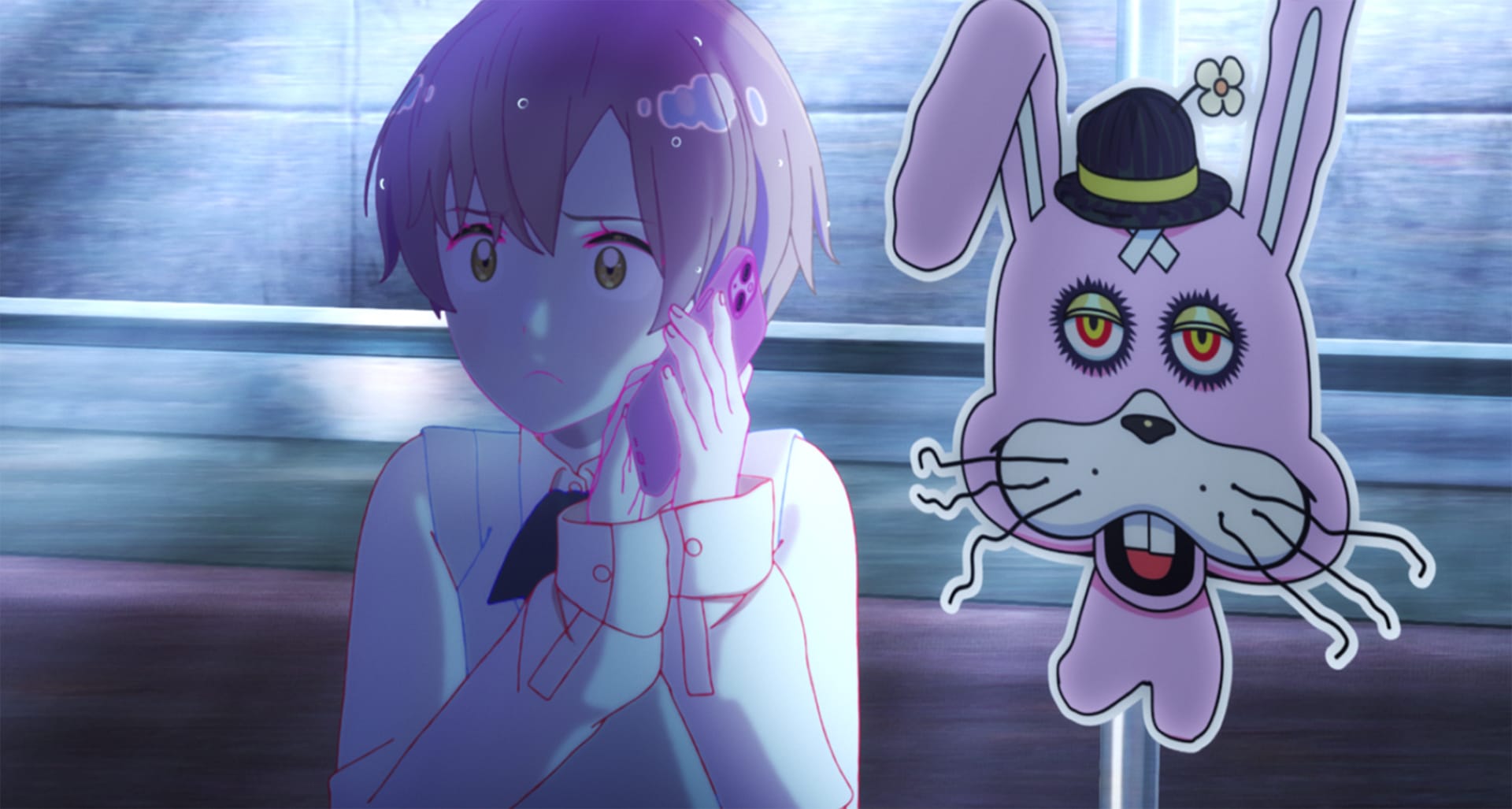
To make the use of smartphones in the film feel realistic, Kawamori brought in real artists and their characters, like KAWAISOUNI’s Opanchu Usagi, to feature in the movie as LINE-eque stamps used in online chats that come to life within the smartphone world. These can feel somewhat intimidating in-world, considering they represent souls lost in this world, though you wouldn’t tell from these cute characters’ external appearance. All are familiar characters rather than original creations too, used to make the world feel more in-tune to our own, and despite the more unusual depiction most artists had little to append and allowed the team freedom to use them as they saw fit.
“Surprisingly, it wasn’t too much of an issue,” he noted. “Once we explained to the creators what we wanted these characters to be and how they would be depicted, they were all very open to the idea and were very happy to allow us to portray their characters in various ways.”
Beyond the commentary on how the smartphone has changed how we see the world and interact, the role of music even makes its way into the casting of the film. As Shiori becomes an ever-more popular rising star through social media, the mysterious Kagami recruits this unknown impersonator into their talent agency and massively promotes her as a new-age Japanese celebrity with the power to sing and dance and unite the country. Through her, maybe the virtual and physical worlds can be connected, with absolutely no negative consequences to such a move.
Both Shiori are performed by SUZUKA of Atarashii Gakko!, an obvious choice considering her dance and music skills match nicely to Shiori’s role as a somewhat-unwilling star.
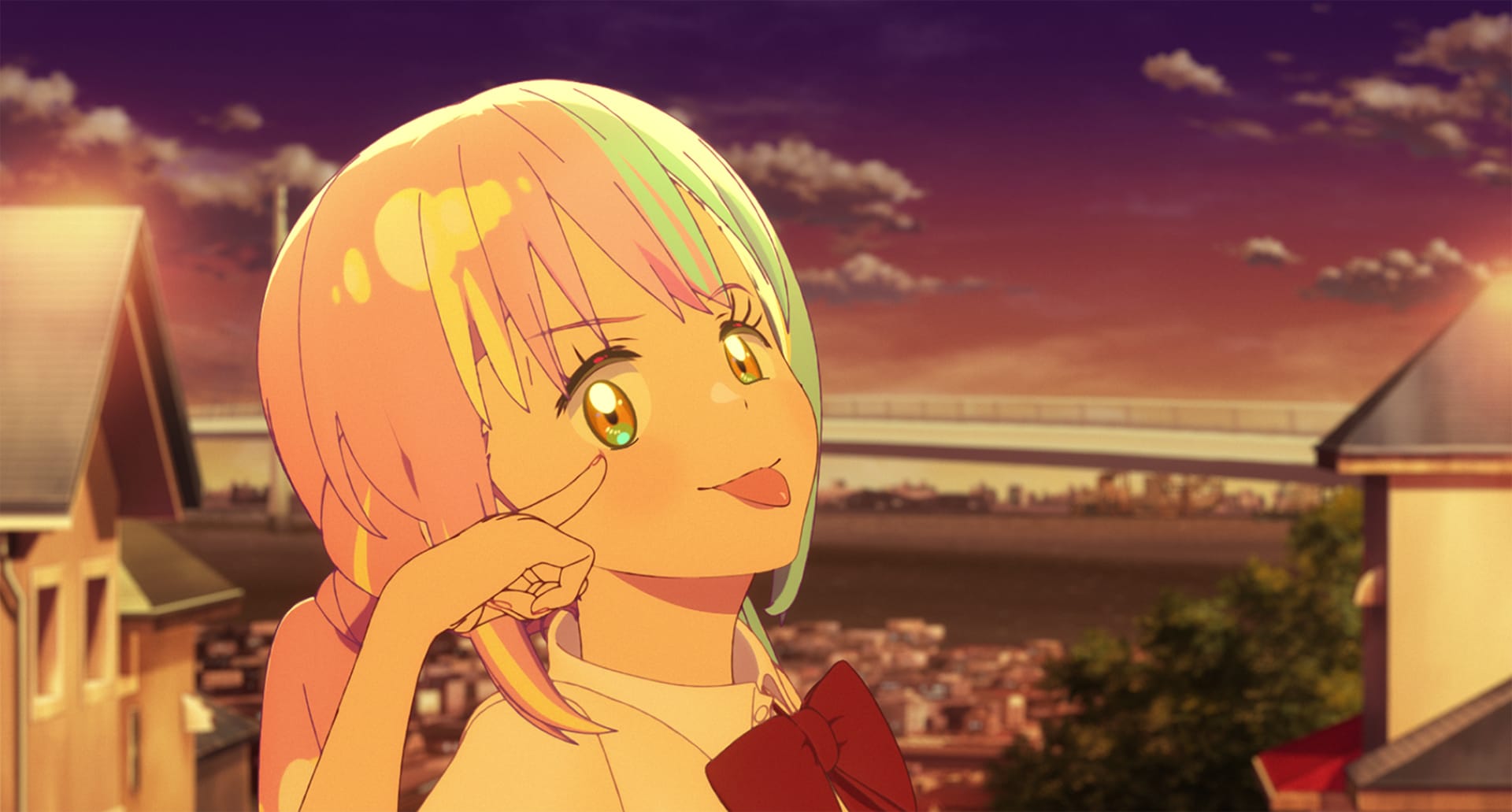
“One of the big things we wanted with Shiori’s character is that I didn’t want her to sound like a typical character in an anime, since she’s just a normal girl, so we wanted someone who wasn’t a voice actor,” explained Kawamori. “I thought that SUZUKA would be perfect because she can also sing and perform but relate to the story being told. I didn’t even have to direct her too much, as she gave this very raw style of performance that I felt captured the vulnerability of the character well.”
Her performance, despite having not been a voice actor prior, is a natural fit for the role and brings a newer dimension to the role compared to similar characters, the key to helping this story of an ordinary girl navigating an online world resonate. For all Kawamori himself never grew up in a world where smartphones have been an ever-present, only witnessing the technology’s slow encroach into this world, he’s successfully crafted a story building on his long-running themes from the perspective of someone whose world has only seen the growing surveillance, pressure and inter-connectivity it brings.
It’s not a warning for their total eradication either, merely a conversation that we should consider our relationship with it as well as how it shapes the one we share. There’s value in that, and the chance for Kawamori to occasionally indulge in particular trademarks of his work in mecha and science fiction - you’ll know when you see it - is not unwelcome. Labyrinth is a nice film to see released in this current environment, while standing as proof that its director refuses to be trapped by his past, embracing the present and future and our role within that. Then and now, even as the smartphone changes the world we live in, we’re still in one where a song can unite and alter our path forwards.