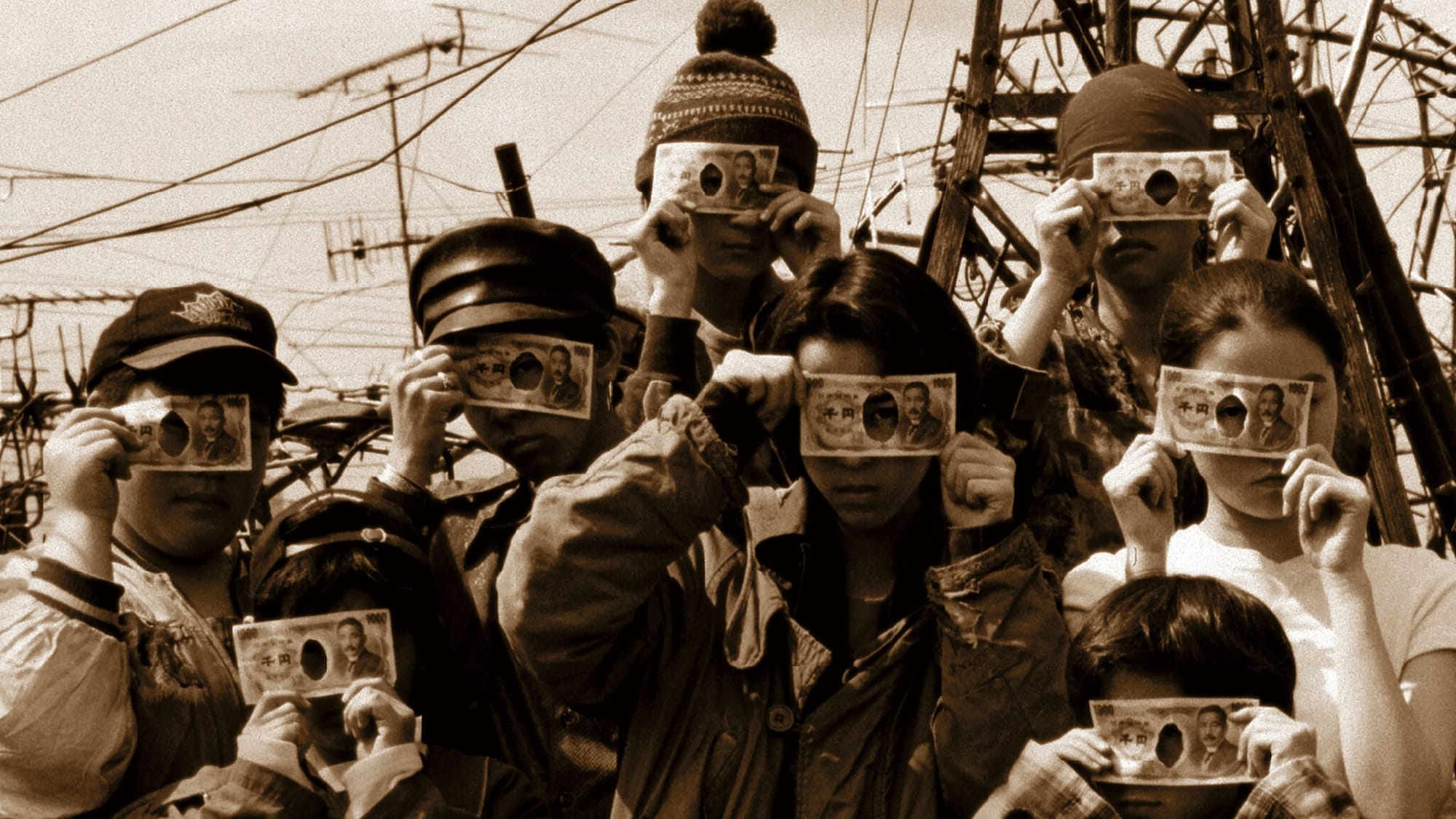
Shunji Iwai’s Swallowtail Butterfly opens with a thesis statement. “Once upon a time, when the yen was the most powerful force in the world, the city overflowed with immigrants like a gold rush boomtown. They came in search of yen, snatching up yen, and the immigrants called the city 'Yentown'. But the Japanese hated that name, so they referred to these yen thieves as Yentowns.” The dream of a better life, and the exploitation of those pushed to the side whose underclass existence is only worthwhile when it serves or entertains them, even as they otherwise struggle. But they’re human. As the narration ends, it becomes clear what we’re strapping ourselves in for over the next almost-three hours.
“It sounds like a fairy tale. But it was a paradise of yen, Yentown. And this is the story of Yentowns in Yentown.”
Even with the message made clear to the audience in the opening minute through these words, that doesn’t mean that Swallowtail Butterfly doesn’t have so much to offer its audience underneath the course, multilingual and diverse surface. This is a film about immigrant life and second-generation people trying to find a life in their home while still being viewed as outsiders, but also reflects the economic anxieties of the 1990s this film was released within during the post-bubble world. Anxieties that are beginning to resurface once again as Japan faces inflation and growing immigration. Yet rather than speak evil of these people, their stories, no matter how tumultuous, are stories of hope and celebrate this change as a virtue, which is the film’s greatest gift.
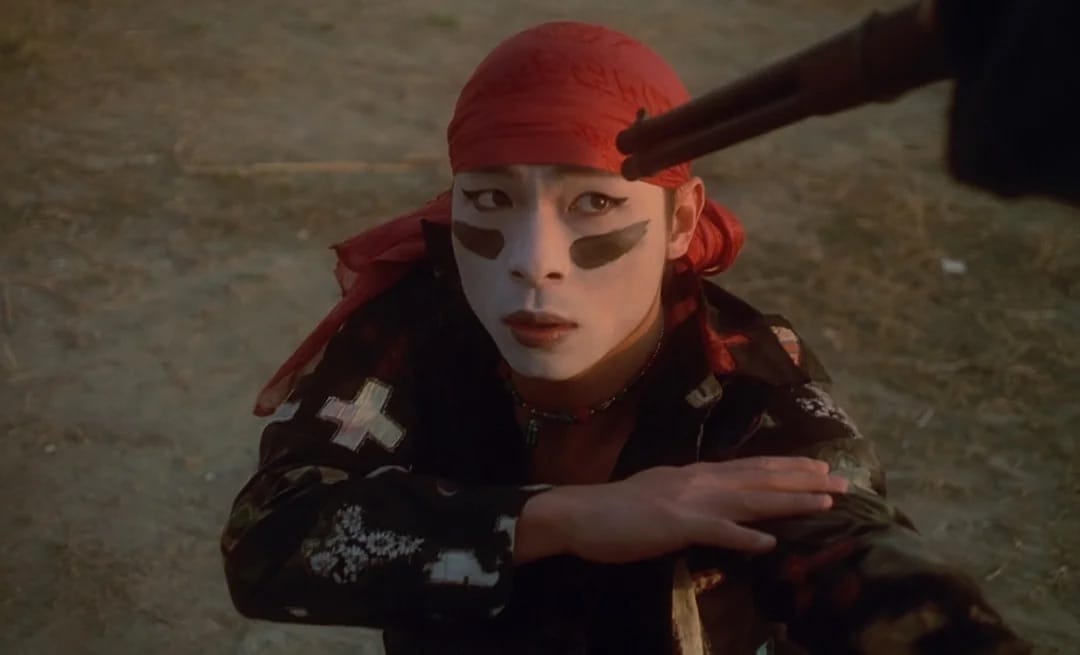
Though almost anthology-like in how it jumps between characters and stories, centrally the story follows a girl with no name who later comes to be known as Ageha (Ayumi Ito, who also played the lead in another of the director’s works, All About Lily Chou-Chou). She’s the daughter of a prostitute of Yentown’s downtrodden existence, taken in by a woman called Glico (Chara) with nothing around her but other immigrants and outcasts all obsessed with the money, the yen, that could change their lives. The rough plot involves a dead yakuza, the tape of Frank Sinatra’s My Way lodged in their stomach that also includes magnetic data for forging 10,000yen bills, and the people out to get it back willing to use money and any power they have to get it back. Greater intrigue comes in the smaller stories peppered around it that give these people purpose, mainly revolving around the Yen Town Band that gives some of them a musical purpose and the club built to house them using forged money.
This is an alternate-future Japan, but in 1996 the intent behind this unique setting was clear. Following the bursting of the virtuous Japanese economic bubble at the end of the 1980s, everything changed for the country. Before that point, it seemed like economic growth would never end, and it really felt like the yen was the strongest currency in the world. Spending power was so strong Japanese companies were buying up US ones as well as major property like it was nothing based purely on the relative strength of the currency, and the concept of Japan becoming the richest country the world and exporter of the world’s tech future seemed inevitable. And yes, people sought for the yen because of that perceived strength.
The crash sent shockwaves both domestic and globally. Suddenly, employees were being laid off, and the anxiety that Japan was losing its role and purpose (and wealth) only grew. This was as other issues for the Japanese economy, such as its need to import foreign labor even as many were wary of this fact, only grew in concern. There was perceived Japanese superiority to the rest of the world as many still viewed the country in the image of what once was but no longer was true, which meant those who didn’t fit the image of Japanese were shunned.

Many of these issues forming the underbelly of Yentown’s construction in Swallowtail Butterfly exist today. An aging population means Japan is eying foreign labor more, all at a time when overtourism conflated with long-term residents and their perceived behavior is inflaming tensions as the weak yen brings people to the country. Diversification of Japan has improved living conditions for some non-native Japanese and second-generation citizens, but mostly those who are white. Even then, the view as a full person equal to a ‘true’ Japanese is questioned.
The strength of Shinji Iwai’s work on this film is using these anxieties to not just prove at why people may feel this way, but to create a multicultural cacophony that sings the praises of embracing the Yentowns that exist in our world. Ageha is not Japanese, nor is Glico, often conversing in Chinese. The language for these outcasts is occasionally Japanese but just as often English or Chinese, the two languages more prominent than Japanese over the film. Even as they sound far from native, any awkwardness in these many languages feels correct in this world because these are people getting by how they can.
As the intensity of the yakuza chase far removed from the typically-slower affair of Iwai’s films grows, effort is made at all points to give a face to the complicated existence these people are forced to navigate to find dignified living in this unforgiving world. The greed of money is highlighting as hurting both Yentowns and the rest equally, while the question of feeling pride in the self while accepting the moral quandaries of the opportunities given to you intercedes in fascinating ways.
Take the Yen Town Band. Bryan Burton-Lewis plays himself, a second-generation child of immigrant parents who's only ever known Japan as his home. He was born here and knows no other country but this and likes it for all his flaws, but is exiled to Yentown despite being native to the country because as a white man he could never belong, truly, to the country. Glico, meanwhile, immigrated, but her Asian appearance means that, as the band gets popular enough to attract music label attention, the concept of her ‘becoming Japanese’ and hiding this past offers her money and a way out.
How you view yourself and how you choose to live as money and identity clash in lands unfamiliar. Swallowtail Butterfly’s strength lies in how no other Japanese film truly explores this question in such a manner. None with such a multinational cast in this many languages, where Sinatra’s My Way feels not just like a cool insert song b a mantra for how these characters live. The action exists, but it never feels like the soul of the film. If anything, the core issue of the film is that this segment contributes heavily to the extended length of this story while being one of its weakest aspects. Time spent exploring the heart of what Japan as a nation is, should and could be when it comes to how it views its relationship to capitalism and its fellow man, no matter their language or color of their skin. That’s where the film shines.
It’s a weird creation but that’s the point, only possible using the goodwill and intrigue built around Iwai as a director hot off his success with his TV movie Fireworks, Should We See It From the Side or the Bottom and that year’s Love Letter. Swallowtail Butterfly is an oddball finally amidst the director’s filmography, but nonetheless stands as one of his best.
scrmbl's Classic Film Showcase shines a light on historical Japanese cinema. You can check out the full archive of the column over on Letterboxd.