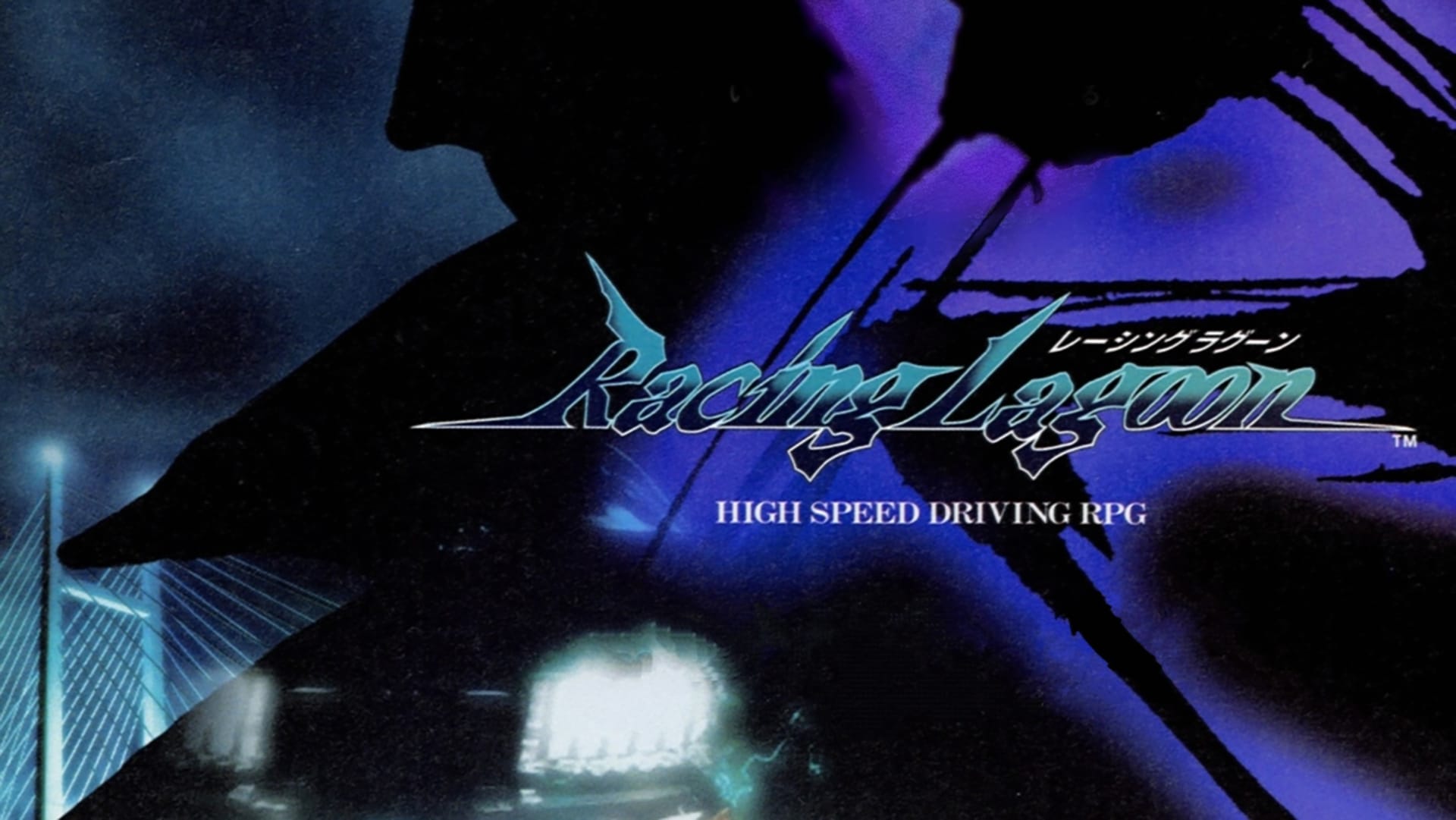
Throughout the 90s, Square was the leading name in RPGs in any corner of the world, with franchises like Final Fantasy constantly setting new standards in production values and overall quality. Through its continued success, Square was often able to put resources into smaller projects, new IPs, and even branch out into different genres. One such experimental game concept that is often overlooked is the Japan-only Racing Lagoon, billed as a “high speed driving RPG.”
Released for the Sony Playstation in 1999, Racing Lagoon was produced by Akitoshi Kawazu of SaGa series fame, with Hitoshi Sasaki in the director role. Sasaki was previously a designer on the (also Japan only) Super Famicom RPG Bahamut Lagoon, which shares some other team members with Racing Lagoon, such as Motomu Toriyama, credited as a writer on both games. Although the two games are not directly related, the “Lagoon” moniker serves as both a descriptor of the port-town setting of the game, a fictionalized version of Yokohama, while also being a subtle reference for fans of Bahamut Lagoon who might be drawn in by the prospect of a new project from the same talent.
Racing Lagoon combines genres that flourished during the 32-bit era
With games such as Ridge Racer, Gran Turismo, and Daytona USA bringing more realistic simulation driving, as well as arcade-style racing to home consoles during the age of PSX and Sega Saturn, Racing Lagoon arrived at the perfect time to capitalize on the expanded capabilities of 32-bit hardware. Both the racing genre and the RPG have been popular as long as video games have been around, but the late 90s in particular saw a boom to the level of detail and sophistication in which both could be explored.
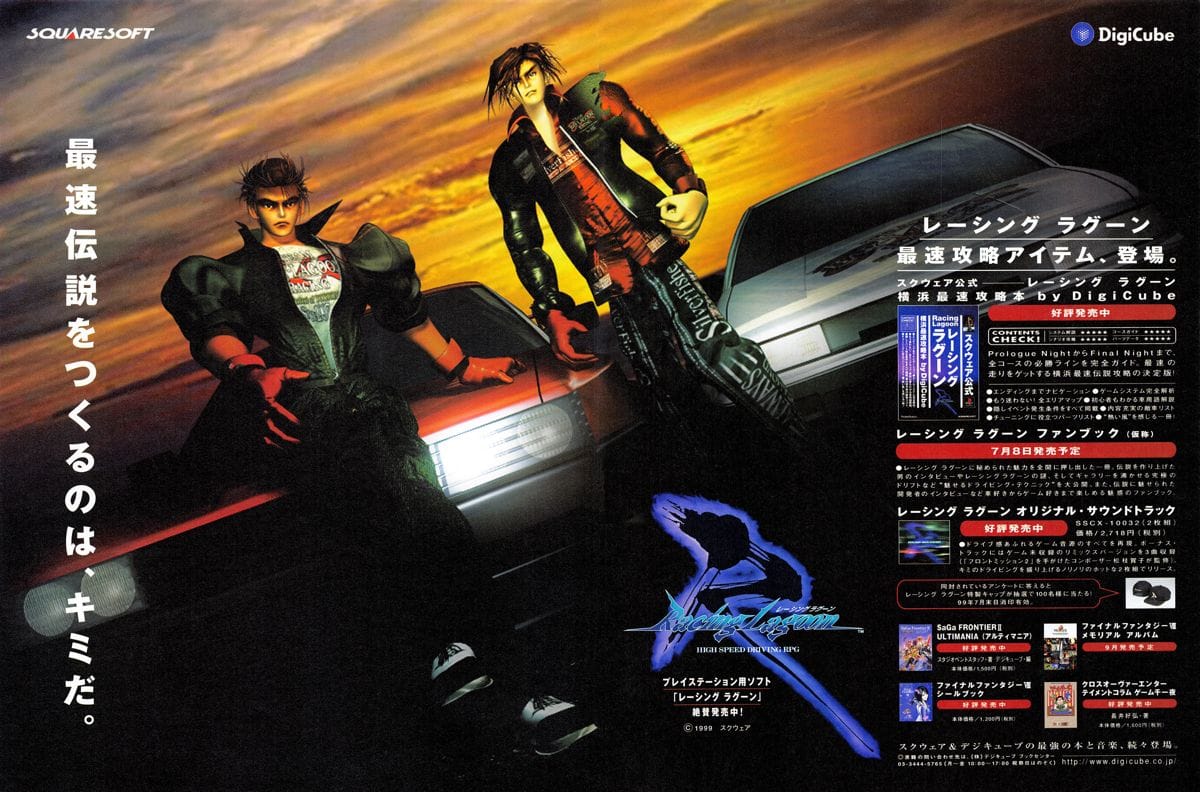
Racing Lagoon is essentially an attempt to tie together elements found in RPGs with an semi-open-world driving simulator, and close out the 32-bit era by marrying the two genres that maintained popularity throughout the decade. It features a story that tries to create its own version of local street racing culture molded in part by Japanese street racing culture, albeit being a much more dramatized, if not anime-like rendition of such, centered around racing cliques, and racing legends of the night.
Gameplay features battle races against various opponents that the player can encounter as they explore the city. Over the course of the story, there is an expansive list of parts that can be purchased and obtained from night to night that provide vehicle customization and upgrades. Part progression plays a huge role in the “RPG feel” of the game, as there are always upgrades to earn to match the power of opponent racers and gain the edge in a way similar to how one would level-up in a more traditional RPG. There are also a number of UnOfficial races that can be unlocked over the course of the game that fill the role of sidequests, which come with their own restrictions and rewards.
Why should you play Racing Lagoon?
Racing Lagoon is a game that was completely overlooked for global release, and didn’t sell particularly well in Japan. That being said, it is certainly a game that fits a nostalgic vibe. Given such, most gamers familiar with that period of gaming would easily find it an appealing and worthwhile endeavor.
Noriko Matsueda and Takahito Eguchi’s combined efforts produce a gem-quality soundtrack of era-appropriate jazz fusion music – the type that could only come from a video game made in the late 90s, that is comprised of around sixty atmospheric tracks which match the mood of moonlit racing in the city and chilling. Some might even consider the case that the soundtrack is an equally as tragic victim of Racing Lagoon’s limited Japanese release as the game itself, with how appropriately the music exemplifies the time period of video game music.
While the racing gameplay itself is about as basic as you would expect from a racing game of the time if compared with more modern racing games, the story and setting is a mostly unique experience, with some similarities to the anime and manga series Initial D, also popular around the same time. The niche is small enough in that if you consider yourself a former or current fan of the like, you would likely find the idea of a street racing RPG very welcoming. If you aren’t too familiar with the manga style street racing concept, it is similarly compelling to give Racing Lagoon a shot simply to experience an odd-but-intriguing fusion of various gameplay and cultural elements representative of the 32-bit era of gaming in a way that hasn’t since been attempted, with an entertaining story on the side.
A fan translation for Racing Lagoon was completed in 2021, and is available for those savvy enough to seek it out. If you feel the need for speed-coded nostalgia, that could and very well should be you.