When you think about the classic fantasy genre in terms of the West vs Japan, many of the basic elements align: mythological creatures like dragons. Swords and sorcery. Typically settings with less technologically advanced societies. In the case of the West, a lot of inspiration comes from folklore and world history. In the case of Japan, however, fantasy writers have taken some inspiration from the West’s view of the genre in order to create their own clear-cut versions of fantasy settings in video games, manga, and anime. There is a distinct style to the Japanese way, and Slayers is one of the definitive works that helped to popularize that style during the 90s, and establish many of the core elements we have grown to expect from Japanese-style fantasy.
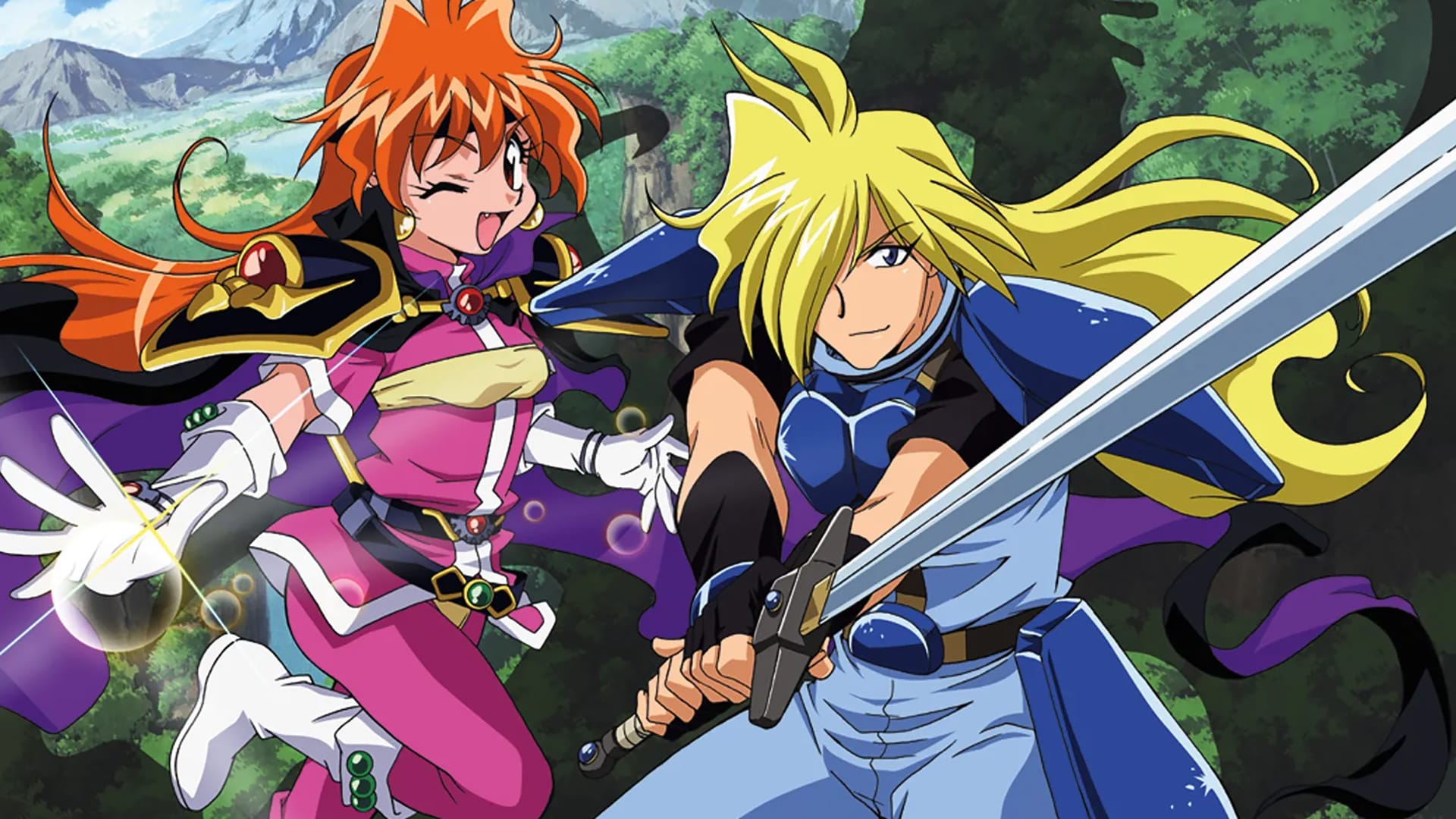
Set in a carefully constructed universe full of its own laws, natural order, and mythology, Slayers enforces the idea that Japanese fantasy tends to place a heavy emphasis on world building. The mysteries of the world slowly unravel to the audience, through the eyes of the teenage sorceress, Lina Inverse, who finds herself in a variety scenarios equally as likely to be whacky as they are to lead to dire, world-threatening consequences. Likewise, the stories provide a diverse share of comedy, action, and interesting lore, as the Japanese-style fantasy takes pride in building up its antagonists. In Slayers, this includes bandits, monsters, other powerful sorcerers, and mysterious demigod-like beings. The series does a great job of constructing a hierarchy of foes, with links to each other and callbacks over the course of its entire run, which is a great way to keep the audience interested in the ultimate fate of its cast of heroes and anti-heroes.
Slayers is fondly known as an anime, but started off as a light novel
Slayers started as a short story series, written by Hajime Kanzaka with artwork by Rui Araizumi, and was serialized in Dragon Magazine's 1989 October issue. It was then gathered into volumes that were published as light novels. Kanzaka was challenged with the task of finding a direction for the series, as the first volume was a completed story. Over the course of the next few volumes shorter stories turned into larger narratives, and the series continued for 15 volumes, ending in 2000. In 2018 and 2019, new story arcs were explored, adding 2 more volumes to the total.
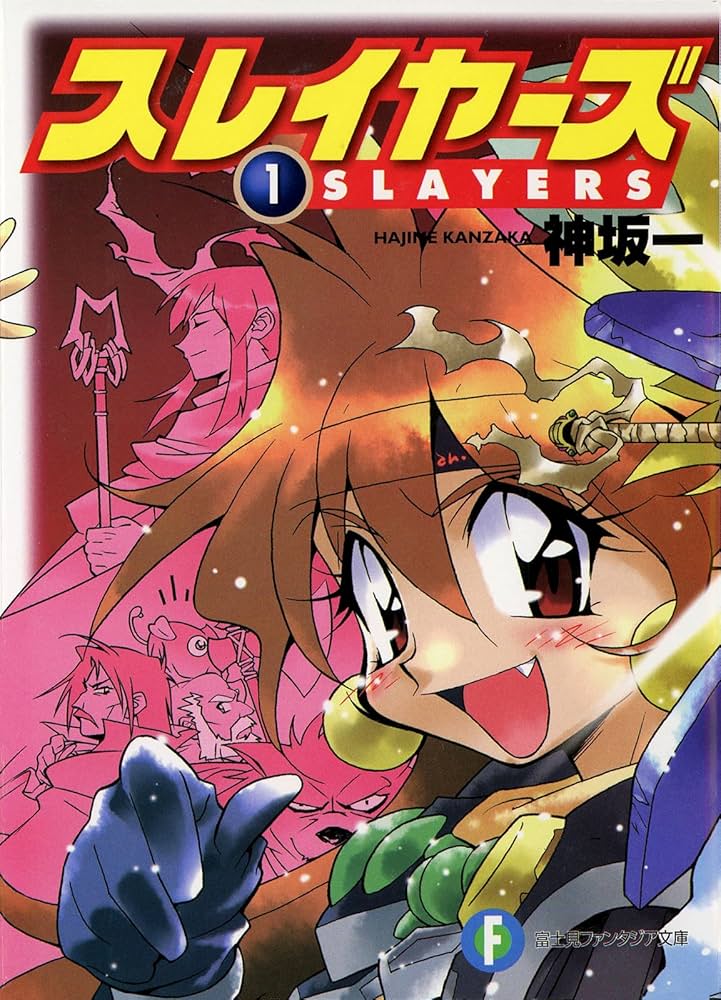
While the anime adaptation (circa 1995) was widely popular outside of Japan by the end of the decade, the light novels were not available in English, until the first 8 were released by Tokyopop between 2004 and 2008. These 8 volumes correspond to the first anime series, self-titled Slayers, and the 2nd series, Slayers Next, leaving roughly half of the content in the light novels off the table until J-Novel Club relicensed the series in 2020. The anime series post Slayers Next branched off into mostly original plotlines, often connected in some way with established branches written in the novels.
Thus, fans of the original series in the West have had a reason in recent years to renew their interest in the series, after several decades of poor accessibility. Additional spin-offs focusing on the adventures of Lina Inverse and her companion and rival Naga the Serpent, such as Slayers Special (consisting of 30 volumes) and Slayers Delicious (4 volumes), among others, still have no official English translations to this day, unfortunately.
What is a good starting point to get into Slayers?
As previously mentioned, Slayers and Slayers Next cover the first 8 (3 from the original series, 5 from next) of the light novels, which makes for an easy initiation into the series. At this point, the entirety of the original light novel run totaling 17 volumes and all of the main anime series is accessible, allowing for a new fan to choose their own path and experience the introduction to the story in either anime or light novel form, as they see fit.
Slayers Try is the follow-up to Slayers Next, and consists of a mostly original storyline not found in the light novels, so at that point the two mediums branch-off in separate directions. The anime continues with original stories with Slayers Revolution and Slayers Evolution-R, which initially aired in 2008 and 2009 respectively, a decade or so after Slayers Try.
From there, the Slayers rabbit hole gets a bit deep, as there are various other films, OAV specials, and multiple manga original stories (featuring various artists) that span a ton of additional content. Although many have not been officially translated, most things Slayers related can be approached through navigating unofficial fan translations.
Kanzaka continues to produce new stories even today, with Slayers Spirit releasing as recently as 2025. Although the series has not been as active as it once was, there is no indication that the spin-offs will come to an end anytime soon, and additional main-story arcs might be in the cards for the future. It’s been almost two decades since Slayers Evolution-R, so perhaps a new anime series, or even a reboot awaits sometime in the near future.